Will ICOs Kill Off Venture Capital?

bitcoin-market

For the first time ever, ICOs have surpassed traditional venture capital for early-stage companies. In April 2017, ICOs raised just under $100 million. In May 2017, that number jumped to $250 million. In June 2017, it jumped again to $550 million. By comparison, traditional early-stage venture capital funding in June 2017 was just under $300 million. And, considering the popularity and tremendous growth of ICOs, this gap will likely continue to widen. In total, over 228 ICOs have raised $3 billion so far in 2017 (through November 30). (Data from www.Coinschedule.com.)

What does this mean for traditional venture capital? Is venture capital finished as an investment vehicle for early and mid-stage startups? Hardly. Even if ICO’s eventually become commonplace, they are a long ways off from being the de-facto investment vehicle for startup companies.

Reasons for Venture Capital Sticking Around As a Investment Vehicle:

  • Expertise/Experience/Connections – There will always be a need for professional expertise in the evaluation process of investment opportunities, particularly with early-stage startups. Unfortunately, ICOs do not provide investors with objective expert advice on the company or their investment potential. Typically, ICOs are issued with an accompanying white paper from the company explaining the investment opportunity. Obviously, this would not be considered objective expert advice for investors. In addition, most venture capital companies assist startups with important networking connections and their experience in building and scaling companies. Without the help and guidance of venture capital, some currently successful companies may not have made it.
  • Due Diligence – Part of the appeal of ICOs is that startups can raise large sums of money bypassing traditional venture capital markets. However, in doing so, these startups also escape a necessary level of scrutiny that is typically performed by venture capital, and is essential for the due diligence of the investment.
  • Oversight – Another benefit of traditional venture capital is company oversight. This oversight often comes in the form of a board of directors, who have a fiduciary responsibility to the shareholders, and are also entrusted with the direction of the company as their custodial duty. With ICOs, board of director seats that would normally be allocated to venture capital investors would now be occupied by the founder’s allies or be left vacant entirely. The founders may feel compelled to spend money simply because it’s there. And without oversight, that spending can quickly spiral out of control. In addition, the founders may feel less motivated to work hard since the money was so easy to come by. In a way, the more difficult process of acquiring traditional venture capital forces entrepreneurs to hustle and work harder to find product-market fit in order to obtain funding.
  • Overheated speculation – So far, most of the early investors in ICOs have been early adopters and venture capitalists in the blockchain technology space. However, institutional investors such as hedge funds and mutual funds, are now showing a lot of interest in ICOs as well, and eventually will enter this market. As more investors jump in the pool and start investing in ICOs, the speculative nature of ICOs increases exponentially. When that happens, more non-professional investors will “follow the smart money” and begin to see ICOs as a path to quick riches. I see the ICO’s as rocket fuel for the current crowdfunding craze, almost similar to Kickstarter on steroids. However, when the rocket fuel burns out, the potential for a major crash is also very likely.
  • Government regulation – As has typically happened throughout history,  when markets crash due to over-speculation, governments step in and increase regulation of those markets (see 1987 Black Monday crash, 2000 dot-com bubble, 2008 financial crisis, etc.). Eventually, governments will move to regulate ICOs. It has already happened in China. In Sept 2017, Chinese authorities banned ICOs. However, a subsequent announcement stated that the ban was only temporary, until licensing regulations could be put into place. Let’s just hope that the regulation comes sooner than later, and before a major financial catastrophe occurs. On the other hand, traditional venture capital is currently regulated and subject to national and international laws.
  • Illegal activity – Since ICOs are not currently government regulated, they are prime vehicles for money laundering. The Monetary Authority of Singapore (MAS), stated that ICOs are “vulnerable to money laundering and terrorist financing risks due to the anonymous nature of the transactions, and the ease with which large sums of monies may be raised in a short period of time.” And anytime there is the ripe potential for criminal activities, governments will actively get involved in regulating those activities.
  • Instability – In a way, it’s still the Wild, Wild West out there when it comes to ICOs. Anyone with a laptop can create a company and offer ICOs to the average Joe to invest in. This democratization and ease of investing in companies via their ICOs make them highly volatile and susceptible to speculation and boom/bust cycles.
  • ICO hacks and scams – Currently, it is very easy to hack an ICO, either by staging an ICO for a fake company, gaining access to the cryptocurrency wallet where the funds are stored, or simply altering the destination address of the incoming funds. In July 2017, Coindash lost $7 million during its ICO when a hacker altered the digital address the funds were sent to. There have also been cases where the entire ICO was a scam, and the founders merely disappeared with investors money. With traditional venture capital, a proper amount of due diligence is required on the part of the investor. Since the startups that typically issue ICOs are relatively new (and typically have very little information on them), the absolute minimum due diligence an investor should conduct is verifying if the company is actually a legal operating entity, and that it has skilled developers on the team.
  • Operational risk – If the issuing company makes an operational error in the coding or processing of the funds, the monies could all disappear. This obviously would not be a concern with traditional venture capital.

Now this doesn’t mean that ICOs will disappear completely. I believe that ICOs are here to stay. I just think that eventually more regulation and stability of ICOs are necessary, and will eventually happen. Regulation typically begets stability. However, excessive regulation can also kill a promising idea. Therefore, governments must be conscious of that possibility as well.

 

How to Determine and Achieve Product-Market Fit

Product-Market-Fit

In my last post, I discussed solving a customer’s need or providing value as the one of the key determining factors in the success or failure of a business. In this post, I will delve deeper into how to determine if your product or service is actually solving your customers’ needs. This is generally known in most circles as “product-market fit”.

What is “Product-Market Fit”?

I would define “product-market fit” as “the minimum viable product (or “MVP”) that addresses and solves a problem or need that exists in a market”. Again, it all comes back to “solving a problem or need that exists in a market.” Now, generally speaking, if that minimum viable product is to be successful (and continue being successful), it will be necessary for the product to evolve to fit the needs of the market. And those market needs may evolve over time as well, forcing a company to be nimble in their product development, or risk losing market share. Rarely does a minimum viable product nail the product-market fit on its first try, or iteration. However, there have been some very successful examples of this, such as Dropbox, Airbnb, Zappos, Twitter, Groupon, Buffer, Zynga, Foursquare, Spotify, Pebble, Yelp, and others.

Another thing to understand is not only must you be dialed in on your customers’ current needs, but their future needs as well. Learning those needs can take time, experience, and patience. However, that topic is something that requires an entire blog post in itself, and I will discuss in a future post.

How do you know if you have Product-Market Fit?

An excellent way to determine if you have true product-market fit, is (with minimal explanation or demonstration) to give your customer your product/service, and if they can explain the exact value proposition back to you, then you likely have true product-market fit. Again, it comes full circle, as the value proposition is not what the product/service does, but what need or problem does it solve?

Therefore, successful product-market fit is achieved when your value proposition is instantly understood by your target market (sometimes after a necessary brief demonstration or explanation). The quicker your customer can understand the value to them, the stronger your product-market fit.

However, gauging product-market fit is not necessarily easily, even if this goal is achieved. Learning how to gauge product-market fit can take time, experience, and patience. Gathering feedback in the form of customer surveys, interviews, focus groups, and other methods, can also be useful in this regard.

Another important thing to keep in mind is that the next step to achieve growth should not be attempted before the product-market fit is absolutely nailed down. Many times, entrepreneurs and founders attempt to grow the company with a less-than-ideal product-market fit, and their future success suffers as a result.

The 40% Rule

One arbitrary rule that I like to use in determining product-market fit is “The 40% Rule”. This rule states that if 40% or more of your existing customers/users say that “they would be disappointed if they could no longer use your product/service”, then you have achieved product-market fit. This rule was popularized by Sean Ellis, a well-known marketer in the field. And, a good tool to use in asking this question is Survey.io.

Engagement/Retention Metrics

The more scientific way to determine if product-market fit has been achieved is through engagement and retention metrics. For an online produce/service, there are five empirical metrics to measure product-market fit; time on site, bounce rate, pages per visit, returning visitors, and customer lifetime value (sometimes known as “CLV”, “LTV”, “LCV”, or “CLTV”).

Qualitative Methods

However, keep in mind that both of these quantitative methods are not foolproof measuring sticks for determining product-market fit . Rather they should be used as one of many tools in an entire toolbox to measure product-market fit. Some qualitative methods to measure product-market fit include asking questions such as:

  • Has your product/service grown with little or no marketing? If so, has it been via organic methods, such as “word of mouth”? Or, is it some other method or reason? (Extensive word of mouth with little or no marketing is a strong signal of product-market fit. If it’s some other organic method or reason, evaluate whether the results of that method/reason translate into true “product-market fit”.)
  • What does your market feedback from your customers look like? Generally positive? Has that positive market feedback translated into actual sales/adoption? (People vote with their dollars, so strong sales are a good indication of product-market fit. However, for some non-revenue generating products/services, sales are not an applicable indicator. So, while adoption is not as strong an indicator as sales, it can also still be a sign of product-market fit in those situations.)

Common Product-Market Fit Myths

  • “First mover advantage is more important than product-market fit.” The first to market is not always the long-term winner: the market entrant with true product-market fit usually is. Typically, this is the second entrant into the market. But, it could even be the third, fourth, or even later entrant. The reasons for this are obvious: the later entrants in the market can avoid the mistakes and pitfalls of the first entrant, and adjust or refine their product/service offering accordingly for the market. The first entrant then has a difficult time dislodging the later entrant who has achieved true product-market fit, even if offering lower prices or a better product.
  • “Once you have product-market fit, it is hard to lose”. Actually, it can be very easy to lose product-market fit once achieved. Market conditions can change. Consumer demands can change. Competition can increase. Think of product-market fit as a moving target. Even if you’ve nailed it once, you must be vigilant about adapting to the changing market and conditions to keep your sights fixed on the product-market fit.
  • “Our revenue/adoption rate is increasing. We must have product-market fit.” Increasing revenue is one sign of product-market fit. But, it is not the definitive ultimate sign. Too often, the company begins to scale prematurely once they see sales or adoption rate increasing. However, that increasing sales or adoption rate may be due to a subset of early adopters, and not the market as a whole.
  • We can figure out the product-market fit as we go.” Generally, companies tend to vastly underestimate the time necessary to achieve and validate product-market fit. Some of this is borne out of the startup culture itself, and its stress on the aforementioned “first mover advantage”, speed to market, and accompanying pressure from investors. All too often, companies’ early revenue forecasts neglect the customer development process that is an essential component of finding true product-market fit. Thus, they move forward without having nailed product-market fit down. And, this can be a fatal mistake if not quickly corrected.
  • “Once you have product-market fit, you will know.” Often times, you may have found product-market fit, but you don’t even know it at the time. The discovery of product-market fit is often derived from a process of experimentation, and not a single “a-ha!” moment.

How to Achieve Product-Market Fit

Iteration is the key. Keep experimenting to see what works. If something works, keep going, and build on that. If it doesn’t, discard or modify, and keep working at it. Being nimble and able to adapt, or even pivot completely, is essential. Having a closed feedback loop is highly beneficial to this process.

Obviously, customer insight is also essential to achieving product-market fit. That insight can be gained through surveys, buyer personas, customer interviews, focus groups, or other methods. When using these methods, just make sure that your methodology is sound.

Sometimes product-market fit can be achieved with a less than stellar product, and a promising market. Conversely, product-market fit can almost never be achieved with a great product and a weak or non-existent market.

I don’t eschew using metrics to achieve product-market fit. But, be careful about becoming over-reliant on the numbers. Some of it is quantitative-based, some of it is gut feel. But, keep in mind, whichever side you lean towards, that the process should be 100% customer/user-centric.

Conclusion

So find a blue ocean market, keep iterating, and keep working at understanding your customer and market. Then, when you find product-market fit and nail it on the head, both the market and venture capital will come find you!

Obviously, there is a lot more that goes into determining and achieving product-market fit, but these are some of the essential basics.

What other things would you add to the product-market fit discussion?

(Please feel free to share/repost/retweet)


Are You Solving A Need, Providing Value, Or Neither?

ipod_nano_4g_black

I wrote this post because I am seeing too many entrepreneurs who are bound to fail just based on their concept alone. A well known statistic is that 90% of all new business fail within the first five years. This statistic applies to all businesses, technical and non-technical, product and service-oriented, sole proprietors and corporations. And, do you know why they all are failing?

Because their idea either does not solve a need, or does not provide value, to the customer.

In my venture capital days, I met lots of entrepreneurs who had great passion for their ideas and tremendous drive to build their companies. Yet ultimately, their business failed. However, neither their passion or their drive was the problem. A great concept alone does not make a successful business; nor does passion alone for that concept. I saw too many entrepreneurs who failed because they had the concept or passion, or both; but could not solve a need for, or provide value to, the market.

Many entrepreneurs start or continue a business for the wrong reasons; to satisfy their craving for income and wealth, to “do what they love” regardless of if there is a need for their product/service, or possibly to become independent and a “business owner” or “entrepreneur”. These might all be purposeful and motivational reasons for starting a business; but these are bound to be unsuccessful if the business idea fails to address the most important reason for success, solving a need or providing value to the customer.

In the image above, it shows an Apple iPod. The iPod solved a particular need that customers had at that time, and provided value to them simultaneously. The iPod allow customers to carry their music around easily in a small form factor and store lots of songs (as opposed to Walkmans, which were big, clunky, and you had to carry cassette tapes to change your music).

If the reasons mentioned above for starting a business happen to align with solving a need or providing value to the customer, then great! If not, the entrepreneur needs to go back and reevaluate why they started the business in the first place.

People are unconcerned about your desire to make it big, strike it rich, provide for your family, or your personal happiness. When it comes to your business, the only thing people are concerned about is: “How will it help them?”, “Will it solve their problems?”“What’s in it for them?”, “Will it make their life easier?”, “Will it save them money?”, “Will it educate or make them better?”. If your business fails to answer any of these fundamental questions, then your business is in trouble.

To succeed as an entrepreneur, you need to be able to answer these questions with clarity and conviction. The best entrepreneurs are able to surrender their own selfishness (to make money, be self-fulfilled, or be independent) and address the selfishness of others (fill a need or provide value to their customers).

How to Create a Kick-Ass Kickstarter or Indiegogo Campaign – Part 3: Promotion

Wow, where has the time gone? It has been a year since I posted the first two parts of this series. Unfortunately, work and other commitments completely took over. Well, I’m back now for part three, and hopefully more insightful posts in the future.

Ironically enough, one of the projects that kept me busy over the past year was the Kickstarter campaign I created for Lumbos (a device that helps you “Snowboard Better, Easier, Safer, and Funner”). In the process, I raised over $20,000 for the company (138% over goal); and Lumbos became the 2nd highest snowboard campaign of all time on Kickstarter.

This is part two of a three-part series. If you missed part one or two, you can find part one here and part two here.

In part three, we will cover promotion.

Stages
KickstarterCampaignTimeline

The different stages of a Kickstarter or Indiegogo campaign can be divided up into three stages, pre-launch, launch day, and post-launch. Pre-launch promotion should generally start about 2-3 months before launch. This entails planning promotion strategy, creating a targeted outreach list, and building your network via new/existing relationships. Get your personal and professional network on board and have them actively promote for you. (More on this later.) Build new relationships with bloggers, journalists, influencers, etc. By launch day, most of the heavy lifting should be already done. Keep in mind, that the first week of the campaign is key. (Kickstarter released statistics that show 80% of projects that reach 20% of their funding in the first 7 days will eventually reach their funding goal.) Post-launch should be mainly about continuing your momentum with continued promotion and updates.

Sources
 
CrowdfundingPromotionSources

There are numerous sources for promotion, both paid and non-paid. Of the non-paid choices, word of mouth, direct email, Facebook, Twitter, Instagram, and blogs generally seem to be the best for spreading the word about your campaign. In addition to those, you might be surprised to find out a lot of traffic can come from within the Kickstarter or Indiegogo site itself, especially if your title is clear, concise, catchy, and relevant. Of the paid sources, my experience is that well-targeted Facebook ads have the best conversion rate; however your results may differ. The media and press can also be a great promotional tool, obviously. However, the chances of getting your story picked up by a major media outlet are not great, so I wouldn’t necessarily count on it. Keep in mind that not every source works best for everyone. Just experiment with the different sources and see what works best for you. Then put your resources behind your best sources. (More on this in the next paragraph.)

Tracking

CrowdfundingTracking.jpg

Track your sources and traffic. To do this, use bit.ly. Bit.ly is a link tracking service so you can tell where each leads came from. If you add “+” to the end of any bit.ly URL, you can see the stats from that link. This way you can tell where your best traffic sources are coming from; and therefore, you can direct your resources (time, money, energy) to those best sources.

Networks

CrowdfundingNetworks

Don’t underestimate the power of your own personal and professional networks; family, friends, colleagues, industry peers, etc. Feel free to leverage your network for anything from feedback on your campaign to actively promoting for you. Ask them to spread the word and you might even gain an important introduction. Don’t be afraid to ask them to help you out. After all, I’m sure that they wouldn’t mind asking you for a similar favor if they were in your position. The stage that networks most often comes into play is pre-launch. It is generally the first and best place for most people to start promoting.

Audience
CrowdfundingAudiences.jpg

Join the online communities of your audience. Of course, you can always join the offline communities (meetups, for instance); but offline is generally more efficient. Write guest blogs for other sites. This is one of the best ways to get your project in front of relevant audiences.

 Manage Your Social Media
ManageSocialMedia.jpg

Get a social media tool (like Hootsuite) that allows you to connect all your social media accounts, and then manage everything in one place. From this tool, you can send or respond to messages or schedule them in advance, all in one place. This becomes invaluable as a timesaver and organizer of social media messages. Hootsuite also has a free one month trial period so if you can try out first. If you are running a short crowdfunding campaign (30-90 days), you will only need it a few months anyways.

Another great tool to use is Buzzsumo. Buzzsumo not only helps you find the influencers that matter to you, but also tells you what content is most relevant to your product and how much attention it gets.

Provide Updates
CrowdfundingUpdates.jpg

Updates are not only to keep your backers informed, but to keep them excited about the project. In addition, by providing regular updates during the course of your campaign, you may entice someone sitting on the sidelines to back you once they see your success. After all, people love backing winners. Another byproduct of this is that existing backers may also increase the size of their donation. There are generally two types of updates during the campaign, funding and promotional. Funding updates are to notify your backers (and the public) where you stand in relation to your overall funding goal. This is typically done at the 25%, 50%, and 100% milestones of the funding goal. The other type is promotional. These updates are when your campaign/product gets promoted somewhere important (press, blog, etc.), or to thank a backer for a big donation (not my favorite, as I do not like publicly calling people out…unless, of course, they welcome the attention). One key point about updates: don’t overdo them, or you stand to lose backers as they will begin to tire of the messages.

Of course, there are many other methods and tactics to promote crowdfunding campaigns, but these are just a few. What other suggestions would you recommend to promote a crowdfunding campaign?

Please feel free to share/repost/retweet.

How to Create a Kick-Ass Kickstarter or Indiegogo Campaign – Part 2: Delivery

This is part two of a three-part series. If you missed part one, you can find it here.

In this essay, we will cover delivery. In this case, “delivery” means the delivery of your content, not your rewards. This “delivery” encompasses many different things, such as your video, pitch, timing, and updates.

A video is worth a million words

a_video_is_worth_a_million

You know the saying “A picture is worth a thousand words”? Well, a video is worth a million words. A big part of the “delivery” (and by extension, the entire campaign) is the video. As with the “content“, the video must be compelling. If budget permits, have it professionally done by a videographer. Ideally, keep the video length to 2-3 minutes, and no more than 5 minutes maximum. Focus on getting your viewer’s attention (the first 10 seconds are critical). Save the technical stuff for the text copy. However, like the text copy, the video copy should be clear and concise. Practice enunciating words, and reading the script aloud in front of a partner or friend. Practice several times; then ask for feedback.

Make an effective pitch

make_an_effective_pitchMany people invest in crowdfunding, not necessarily just because they want to buy your product, but because they are drawn to a vision; and, in particular, a vision that they want to engage with. Put significant thought into your message and what you want it to say. Show viewers how your product/cause can impact their lives in a direct, positive way. Rather than just talk about product features, tell viewers how you are solving a problem. Also, make your team visible. Be very transparent and let potential backers know who you are. Trust is a big part of crowdfunding.

Use music to set the tone

use_music_to_set_the_toneHere is an example of music effectively setting the tone for a Kickstarter video. This particular campaign was possibly one of the most oversubscribed of all time. (This campaign met its funding goal in the first day; and continued to be 1813% over funded within 30 days!) The product was a revolutionary “magnetic tea infusing vessel“. So, the creators used a “lo-fi” or “lounge” soft music track. If they had used a hard rock or reggae music track, it may not have been as effective with this particular video. (Disclaimer: I thought their entire campaign was so effective, I actually funded it myself).

Tweet: How to Create a Kick-Ass #Kickstarter or #Indiegogo Campaign via @rogerkuo http://ctt.ec/dWb_v+ #crowdfunding

Play to the crowd

play_to_the_crowdA successful campaign benefits both you and your viewer. But, unless it is clear what your campaign will do for them, do not expect them to give you money. So, make sure the viewer can easily identify “what’s in it for them?” Now, if your campaign is based on a cause (and not on a perk), then you need to make them feel good about contributing. Make that good feeling their “reward” or “perk”. Humans are basically altruistic in nature. So, take advantage of their philanthropy.

Pre-answer questions

pre_answer_questionsThis is what the FAQ is for. Any question that you pre-answer may prevent a frustrated viewer from leaving your page, and therefore, not funding your campaign. Also, the more potential questions that you answer, the more it indicates that you have certainly thought through every possibility and contingency. This only adds trust, which in turn, makes the viewer more comfortable to contribute to your campaign.

Timing is everything

timing_is_everythingIf your product is seasonal (snowboards, swimsuits, etc), keep that in mind when deciding when to launch your campaign. If possible, target your product to the right season. People generally don’t think about buying winter clothes in the middle of summer, and vice versa. Create a calendar detailing everything – from when to launch the campaign (weekdays are best when more viewers are on their computer) to timing leverage of social networks and media channels to maximize effectiveness.

Don’t forget to update

Don't_forget_to_updateUpdates allow you to keep in touch with your current backers, as well as possibly enticing new viewers to contribute. Take pictures of your team working on the product or announce a funding/product milestone or goal (video updates are even better). Updates are a very effective way to engage existing supporters and encourage them to share your mission. Updates are easy to do, and will also keep you relevant. You don’t want them forgetting about you after they click the “donate” button.

Tweet: How to Create a Kick-Ass #Kickstarter or #Indiegogo Campaign via @rogerkuo http://ctt.ec/dWb_v+ #crowdfunding

What other suggestions would you recommend to deliver a kick-ass crowdfunding campaign?

And, stay tuned for Part 3 next week on Promotion.

Please feel free to share/repost/retweet.

How to Create a Kick-Ass Kickstarter or Indiegogo Campaign – Part 1: Content

Some people seem to think that there is some magic hack to reaching campaign funding goals on Kickstarter or Indiegogo. It’s actually quite simple…if done properly. Basically, there are three major components of creating a successful Kickstarter or Indiegogo campaign: content, delivery, and promotion.

In this essay (part one of a three-part series), we will cover content.

First, tell a good story

tell-a-storyMost successful crowdfunding campaigns I have seen on Kickstarter and Indiegogo excel at telling a “good story”. This means the story must be compelling. If it isn’t, the viewer will just lose interest or find another project to fund that is compelling. Just imagine that “your story” is a journey; and you are inviting the viewer to accompany you on your journey.  Your story should include components such as; “What inspired this product/project?”, “How did the founder/founders come together to decide on starting this project?”, and “How do the founder/founders intend to make this happen?”

This should be done with simple, clear, and concise text and videos that explain “what the product/project is”, “what it does”, and “how it is groundbreaking”. (I will explain how to create a compelling video in part two of this series). The story should also clearly convey the founder’s goals or intentions for this product/project or company.

KISS – Keep it short and sweet

KISS - Keep it Short and SweetIf the story or text is too long, you will lose people’s attention. If you are having a difficult time shortening it; work at it from the opposite end. Condense the story to the barest elements, or what marketers call the “bones” of the story. Then “flesh” it out from there, and add only what is necessary and what essential points you want to get across. Try to break down longer sections or paragraphs into shorter ones. In today’s world of “short attention spans”, you can’t afford to lose potential contributions just because your material was too long or boring to read.

Focus on the message and tone

POTUSClarity is paramount. And, so is the tone. It is important not to come across as condescending, or worse, desperate. Be confident, clear, and state why you are raising this money and what it will be used for. Even better, build trust with your audience with a breakdown of your budget. This will show exactly what their money will be used for.

Tweet: How to Create a Kick-Ass #Kickstarter or #Indiegogo Campaign via @rogerkuo http://ctt.ec/P57Uz+ #crowdfunding

Don’t be afraid to share details

Max_Levchin_PayPal_FounderThis is also part of your “story”. Tell the viewer a little bit about yourself. What is your background? How might that help with this product/project? (If it even doesn’t help at all, you should explain why you chose this project. Sometimes having no background in the product/project field can be an advantage; as you might see things from a fresh perspective. Make it work for you.) Same goes for your co-founder or team. Tell about other important events or people that shaped your product/project. Again, make it compelling and keep it short and sweet.

Use visuals

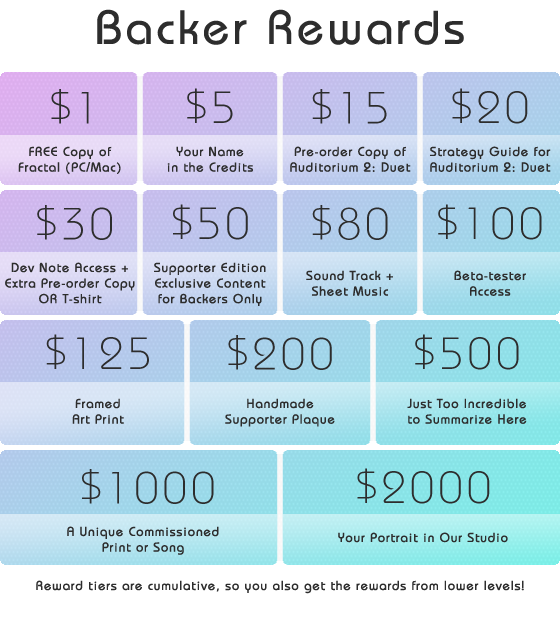
Kickstarter Reward LevelsVisuals help the viewer understand the concept of the product/project better. And if possible, give viewers a sneak peek at the product or project. Don’t worry if all you have is a prototype; it’s better than nothing. Helping the viewer to visualize what they are going to be funding goes a long way. Also, include images of the actual rewards themselves and a chart showing the reward levels (see image above). If done correctly (and not overused), visuals can add personality to your campaign and break up long stretches of text. Most importantly, make sure that the visuals are relevant to the campaign material.

Don’t forget to proofread

proofreadIt sounds so simple: but so many people forget to proofread their own work. Grammatical and spelling errors are one of the surest and quickest ways to kill a campaign. You want the viewer to know that you are intelligent; especially since they are handing you their money.

End with a call to action

call_to_actionAfter all of your hard work, it will have all gone for naught if you do not end with a call to action. You need funding: don’t be afraid to ask for it directly!

What other suggestions would you recommend to create amazing crowdfunding campaign content?

Please feel free to share/repost/retweet. Tweet: How to Create a Kick-Ass #Kickstarter or #Indiegogo Campaign via @rogerkuo http://ctt.ec/P57Uz+ #crowdfunding